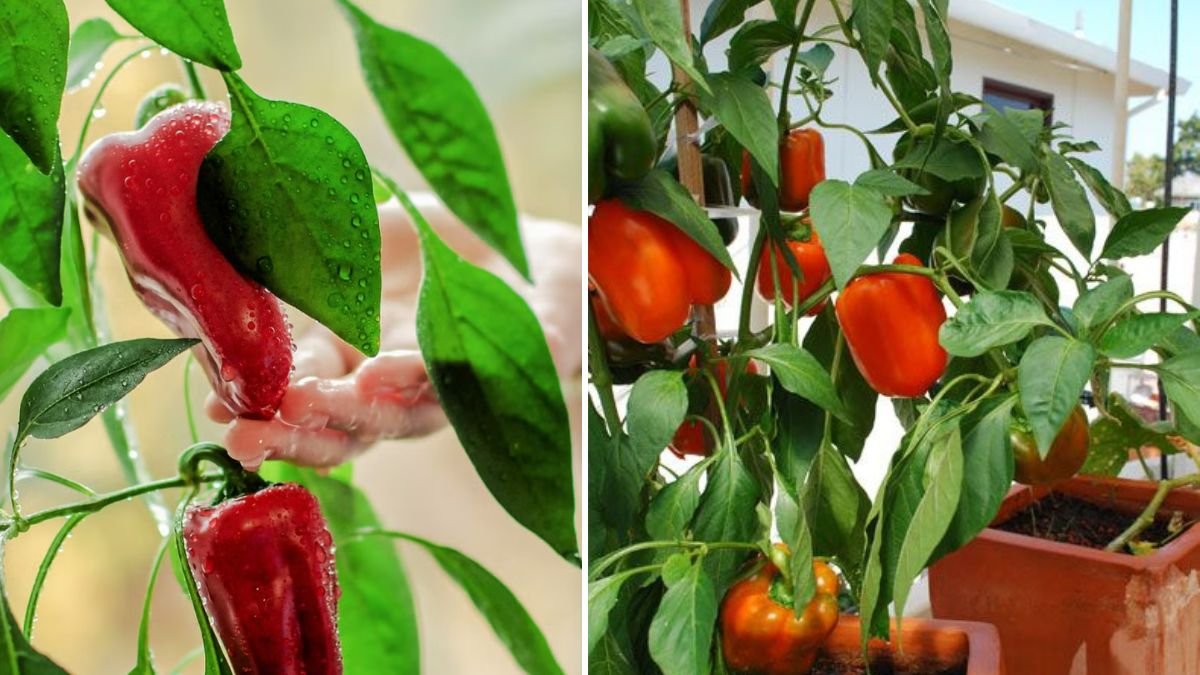
Peppers are one of the most versatile and rewarding vegetables to grow at home. They come in various shapes, sizes, and flavors—from mild sweet bell peppers to fiery chili varieties. Growing peppers in containers is an excellent option for gardeners with limited space, such as balconies, patios, or small yards. Container gardening allows you to control soil quality, water, and nutrients, making it easier to produce healthy, productive plants. This guide will take you through the entire process of growing peppers from seed to harvest, ensuring a bountiful crop.
Why Grow Peppers in Containers?
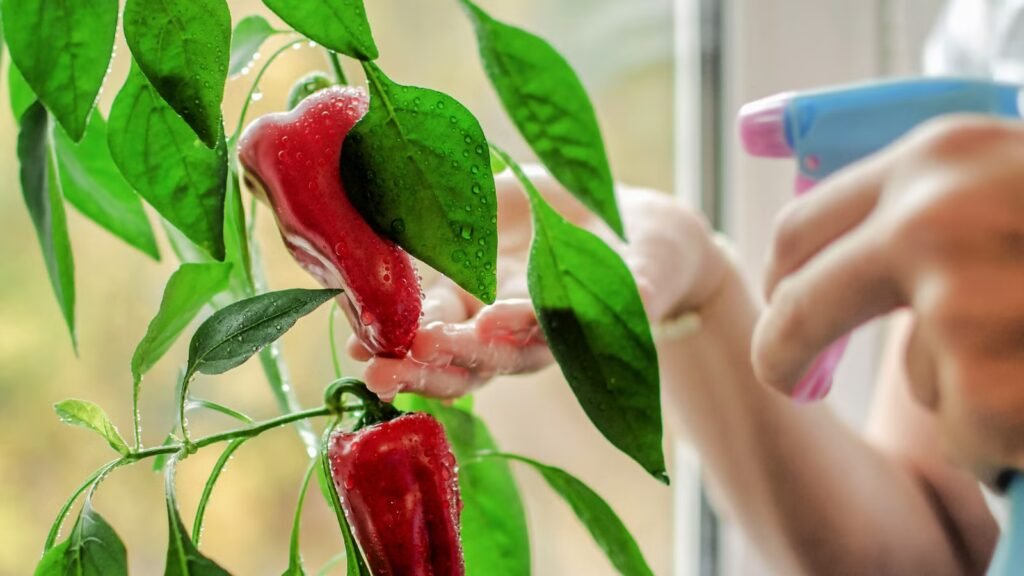
Container gardening is especially suitable for peppers because it allows you to manage their specific needs more easily.
Benefits of Growing Peppers in Containers
- Space-Saving: Ideal for small gardens, terraces, and balconies.
- Soil and Nutrient Control: Use rich, well-draining soil for optimum growth.
- Mobility: Containers can be moved to catch sunlight or shield plants from harsh weather.
- Pest and Disease Management: Easier to monitor plants and prevent infestations.
- Year-Round Growing: With proper care, you can grow peppers continuously.
🪴 Step 1: Choosing the Right Container
Peppers require adequate space for root development and stability for heavy fruits.
Container Requirements
- Size: Minimum 12–16 inches deep and wide for each plant.
- Material: Plastic, clay, or fabric pots with proper drainage holes.
- Drainage: Essential to prevent root rot.
Tip: Place a layer of gravel or stones at the bottom for better drainage and stability.
Step 2: Preparing the Soil Mix
Peppers thrive in fertile, well-draining soil.
Recommended Soil Mix
- 40% garden soil
- 30% compost or well-rotted manure
- 20% cocopeat or sand for aeration
- 10% vermicompost
Nutrient Boosters
- Bone meal: Strengthens roots and encourages flower formation.
- Wood ash: Provides potassium for stronger fruits.
- Neem cake: Protects against soil pests and enhances fertility.
Mix thoroughly to ensure a light, airy, and nutrient-rich medium.
Latest Posts
- OnePlus 15T Smartphone Unveiled – Featuring 200MP Camera, Snapdragon 8 Elite Gen 5 and Massive Battery
- Lava Yuva 5G Unveiled – 120Hz Display and Strong Performance for Everyday Use
- Nokia 1100 Launched – Premium Keypad Phone Returns at Budget Price ₹2,500
- Motorola G96 5G Unveiled – Featuring Stylish Design, Strong Performance and Advanced Camera Tech
- Vivo Y21d Unveiled – Massive 6000mAh Battery for All-Day Everyday Use
- Nothing Phone 4 Ultra 5G Launched – 16GB RAM, AI-Powered 50MP Camera and Flagship Performance
- OnePlus 5G Smartphone Launched – 300MP AI Camera, 7000mAh Battery & 100W Fast Charging
- Nothing Phone 3a Pro – High processor smartphone for gaming lovers – battery is 5000mAH
- Realme 15 Pro – 3 days battery backup smartphone with 50MP front camera under ₹28,000
- Vivo X200 FE – 12GB RAM + 256GB Storage smartphone with HD quality camera
Step 3: Selecting and Preparing Seeds
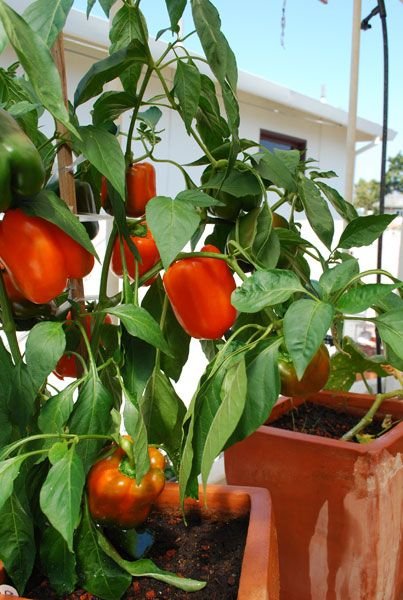
Choose pepper seeds suitable for container growth:
- Bell peppers: Sweet, large-fruited varieties.
- Chili peppers: Compact, upright varieties ideal for pots.
- Specialty peppers: Mini sweet peppers or spicy hot peppers for compact spaces.
Seed Preparation
- Soak seeds in warm water for 6–12 hours to improve germination.
- Optionally, treat seeds with a mild fungicide to prevent early fungal infections.
Sowing Seeds
- Fill containers with prepared soil, leaving 1–2 inches at the top.
- Plant 2–3 seeds per container about ¼ inch deep.
- Cover lightly with soil and water gently using a fine spray.
Germination
- Seeds usually germinate in 7–14 days, depending on temperature and moisture.
- Thin seedlings to one strong plant per container once they develop 2–3 true leaves.
Step 4: Sunlight Requirements
Peppers are sun-loving plants:
- Provide 6–8 hours of direct sunlight daily.
- In extremely hot climates, provide light shade during the hottest part of the day.
Place containers where they receive adequate sunlight and rotate if necessary for even growth.
Step 5: Watering Pepper Plants
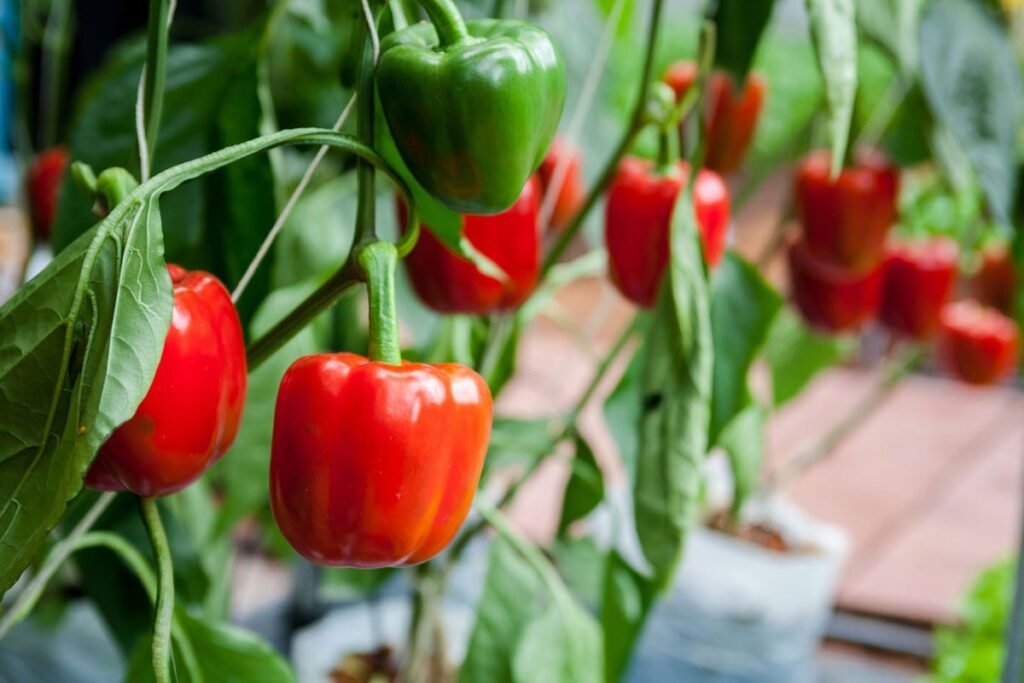
Proper watering is crucial for strong growth and fruit production:
Watering Guidelines
- Keep the soil evenly moist, not soggy.
- Water at the base of the plant to avoid wetting leaves and reduce fungal risks.
- Water in the morning for optimal absorption and to prevent disease.
Mulching
- Apply a thin layer of straw or dried leaves to retain moisture, regulate soil temperature, and reduce weeds.
Step 6: Fertilizing for Healthy Growth
Peppers are heavy feeders, especially during flowering and fruiting stages.
Fertilizer Recommendations
- Organic: Vermicompost tea, cow dung slurry, compost
- Balanced NPK fertilizer (10:10:10) at half-strength
- Natural boosters: Fish emulsion or banana peel powder
Fertilizing Schedule
- Seedling stage (0–4 weeks): Light feeding to promote root and leaf development
- Flowering stage (4–8 weeks): Balanced fertilizers to support flowers and early fruit set
- Fruiting stage (8+ weeks): Potassium-rich fertilizers for bigger, healthier fruits
Step 7: Supporting Pepper Plants
Some pepper varieties require support to hold heavy fruits:
- Stakes: Tie main stems loosely using soft ties.
- Cages: Ideal for bush or taller varieties.
- Trellis: For compact climbing types in small spaces.
Pruning
- Remove yellow or dead leaves to improve air circulation.
- Pinch early flowers for stronger plant growth before fruiting begins.
Step 8: Pest and Disease Management
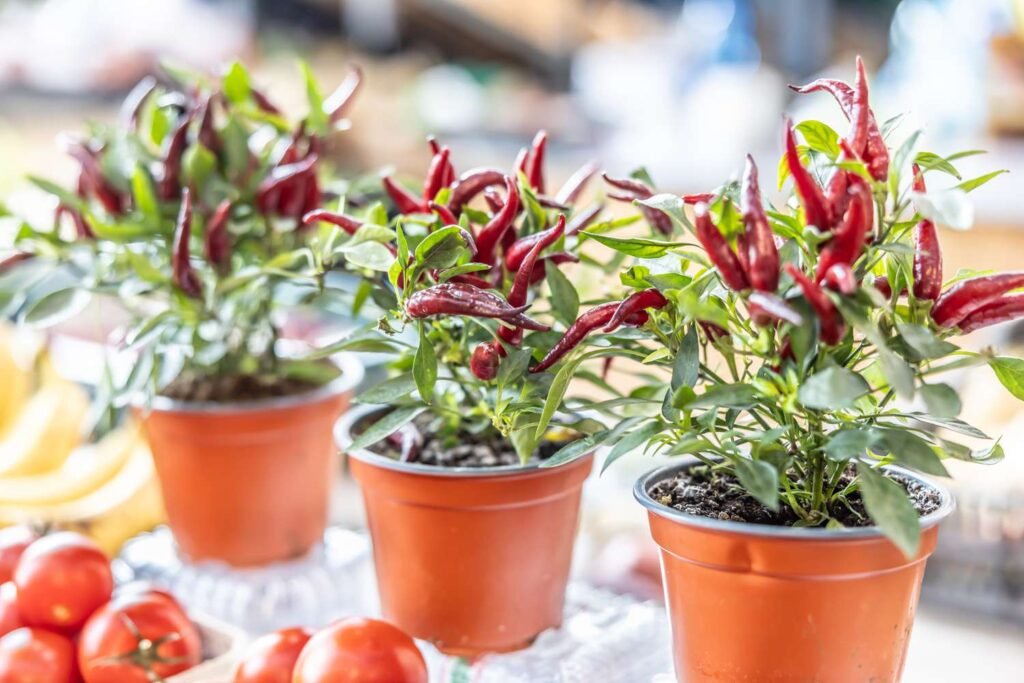
Even container-grown peppers are vulnerable to pests and diseases:
Common Pests
- Aphids: Spray neem oil or mild soap solution
- Whiteflies: Use yellow sticky traps
- Spider mites: Neem or garlic spray
Common Diseases
- Damping-off: Avoid waterlogged soil; ensure good drainage
- Powdery mildew: Avoid overhead watering; improve airflow
- Fusarium wilt: Use disease-free soil and resistant varieties
Step 9: Flowering and Fruit Set
Pepper plants produce flowers that eventually turn into fruits:
Pollination Tips
- Most pepper varieties are self-pollinating.
- Hand pollination with a soft brush can improve fruit set in indoor or low-pollinator areas.
Fruit Management
- Limit initial fruit set if necessary to encourage strong stem growth.
- Gradually allow more fruits as the plant matures.
Step 10: Harvesting Peppers
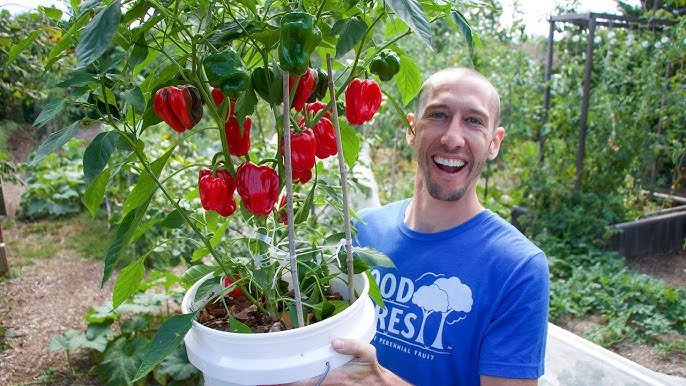
Peppers are ready for harvest 60–90 days after sowing, depending on variety:
Signs of Ripeness
- Color changes according to variety (green to red, yellow, or orange)
- Firm texture and smooth skin
- Fruits separate easily when gently lifted
Harvesting Tips
- Use a sharp knife or scissors to cut fruits from the stem
- Harvest regularly to encourage continuous flowering and fruiting
- Handle fruits carefully to avoid bruising
Storage
- Store freshly harvested peppers in a cool, dry place for several days
- Refrigerate for longer shelf life or freeze for extended storage
Benefits of Growing Peppers in Containers
- Space-Efficient: Perfect for urban or small-space gardening
- Controlled Growth Environment: Soil, nutrients, and water can be managed easily
- Reduced Pest and Disease Risk: Easier to monitor plants closely
- Continuous Harvest: Regular care produces fruits for months
- Fresh and Flavorful: Home-grown peppers are tastier and healthier than store-bought
Bonus Tips for Success
- Rotate containers for even sunlight exposure
- Use slow-release fertilizers for steady nutrient supply
- Water in the morning to prevent fungal growth
- Support plants early to prevent breakage under fruit weight
- Mulch heavily to conserve moisture and reduce weeds
Conclusion
Growing peppers in containers is easy, practical, and highly rewarding. By selecting quality seeds, preparing nutrient-rich soil, providing proper watering, sunlight, fertilization, and support, even beginners can enjoy a bountiful harvest of fresh peppers. Container gardening allows you to grow healthy, productive plants in small spaces while controlling environmental conditions to maximize yield.
With patience and consistent care, a single container can provide multiple peppers throughout the season, giving you fresh, flavorful, and nutritious fruits for your kitchen. Start your container pepper garden today, and experience the satisfaction of growing your very own peppers from seed to harvest!