
Grafting is a horticultural technique that joins two plants to grow as one. It allows gardeners to combine the best traits of both plants. With grafting, you can improve fruit quality, increase disease resistance, and accelerate growth. Even beginners can succeed with proper guidance. This technique is widely used in fruit trees, vegetables, and ornamental plants. Grafting also preserves rare or hybrid varieties. Proper timing and technique are crucial for success. Understanding grafting opens doors to advanced gardening practices. This guide simplifies grafting for home gardeners. Follow these steps for healthier, more productive plants.
1. Understanding the Basics of Grafting
Grafting involves two main components: the scion and the rootstock. The scion is the upper part that grows into the new plant. The rootstock provides a strong root system. Compatibility between scion and rootstock is essential. Choose healthy, disease-free plant parts. Timing matters: graft during active growth periods. Proper technique ensures a strong union. Understanding these basics prevents graft failure. Knowledge of plant types helps select suitable pairs. Grafting enhances plant vigor and productivity. Even small trees benefit significantly from grafting.
2. Choosing the Right Plants for Grafting
Select compatible species for successful grafting. Fruit trees like apple, pear, and citrus are ideal. Consider disease resistance, growth habits, and fruit quality. Healthy, mature rootstock improves success rates. Young, vigorous scions ensure fast growth. Avoid weak or diseased plant material. Local climate suitability is important. Purchase high-quality seeds or saplings from trusted sources. Proper selection increases graft survival. Choosing the right plants saves time and effort.
3. Essential Tools for Grafting
Use a sharp knife or grafting blade for precise cuts. Pruning shears help prepare plant material. Grafting tape or rubber bands secure the graft. Wax or sealant prevents moisture loss. Sterilize tools to avoid infections. Use a small saw for woody rootstocks. Keep all tools clean and sharp. A small brush can apply protective sealants. Proper tools increase the chance of graft success. Investing in quality equipment simplifies the process.
4. Preparing the Scion
Select healthy, disease-free shoots. Cut the scion at a slight angle for maximum contact. Remove leaves except for a few at the tip. Ensure scion length is appropriate for the rootstock. Avoid cutting too short or too long. Maintain scion moisture until grafting. Trim damaged or weak tips. Handle scions carefully to prevent bruising. Preparation affects graft union strength. Healthy scions grow faster and stronger.
Latest Posts
- OnePlus 15T Smartphone Unveiled – Featuring 200MP Camera, Snapdragon 8 Elite Gen 5 and Massive Battery
- Lava Yuva 5G Unveiled – 120Hz Display and Strong Performance for Everyday Use
- Nokia 1100 Launched – Premium Keypad Phone Returns at Budget Price ₹2,500
- Motorola G96 5G Unveiled – Featuring Stylish Design, Strong Performance and Advanced Camera Tech
- Vivo Y21d Unveiled – Massive 6000mAh Battery for All-Day Everyday Use
- Nothing Phone 4 Ultra 5G Launched – 16GB RAM, AI-Powered 50MP Camera and Flagship Performance
- OnePlus 5G Smartphone Launched – 300MP AI Camera, 7000mAh Battery & 100W Fast Charging
- Nothing Phone 3a Pro – High processor smartphone for gaming lovers – battery is 5000mAH
- Realme 15 Pro – 3 days battery backup smartphone with 50MP front camera under ₹28,000
- Vivo X200 FE – 12GB RAM + 256GB Storage smartphone with HD quality camera
5. Preparing the Rootstock
Choose young, healthy rootstock for grafting. Make a clean cut at the grafting point. Remove leaves and side shoots near the cut. Ensure the cut matches the scion shape. Trim any damaged roots. Moisturize rootstock before attaching scion. Sterilize cuts to prevent infection. Proper preparation ensures good cambium contact. Rootstock selection influences plant vigor. Healthy rootstock supports faster growth and fruiting.
6. Types of Grafting Techniques
Common methods include cleft grafting, whip-and-tongue grafting, and side grafting. Cleft grafting is ideal for larger rootstocks. Whip-and-tongue grafting offers strong contact for thin scions. Side grafting works for budding plants. Choose a technique based on plant size and type. Each method requires precise cuts and alignment. Practice on spare plants to build skill. Proper technique ensures successful grafting. Understanding methods increases flexibility. Technique choice affects survival rate.
7. The Grafting Process Step by Step
Align the scion and rootstock cambium layers carefully. Insert scion into rootstock with snug fit. Secure with grafting tape or rubber bands. Apply wax or sealant to prevent moisture loss. Keep the grafted plant in a shaded area initially. Monitor daily for signs of wilting or infection. Remove excess pressure from ties if needed. Ensure proper air circulation around graft. Follow steps carefully for high success rates. Patience is crucial during this stage.
8. Aftercare for Grafted Plants
Water grafted plants regularly but avoid waterlogging. Protect from extreme sun and wind. Check for pests and disease daily. Remove any sprouts from rootstock below graft. Maintain humidity for optimal healing. Fertilize lightly to support growth. Prune excess growth to focus energy on graft union. Monitor graft for signs of stress or failure. Adjust ties or tape as plant grows. Proper aftercare ensures successful grafting.
9. Identifying Successful Grafts
Healthy grafts show new growth within weeks. Leaves remain green and firm. The scion remains firmly attached. Rootstock stays healthy and supports scion growth. Signs of failure include wilting, discoloration, or dry cuts. Early detection allows corrective action. Successful grafts usually show uniform growth. Patience is important during initial weeks. Observation ensures early problem management. Successful grafts eventually produce fruits or flowers.
10. Common Grafting Mistakes to Avoid
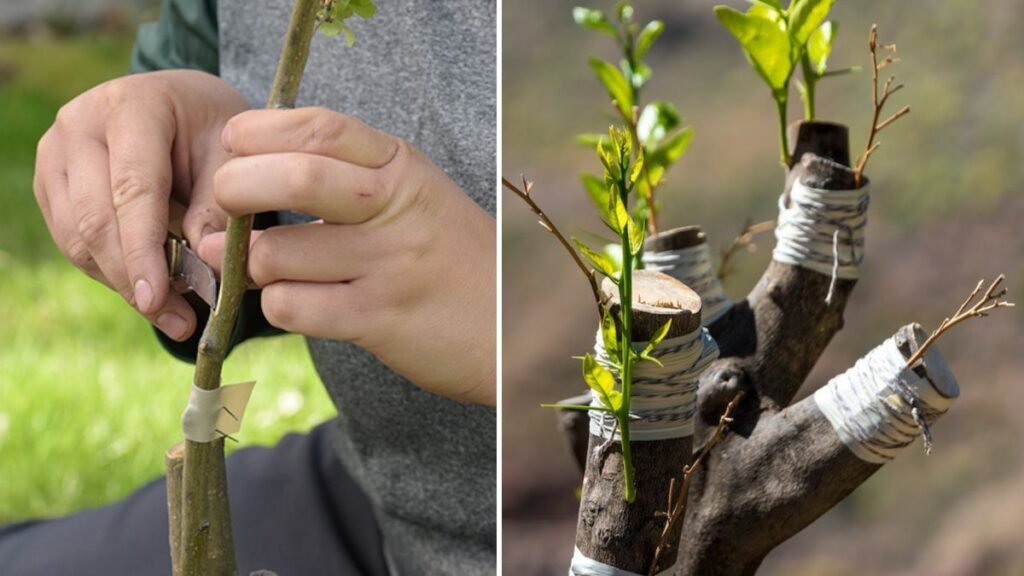
Using incompatible scion and rootstock reduces success. Cutting cambium layers incorrectly leads to poor contact. Over-tightening tape can damage the graft. Neglecting aftercare causes stress and failure. Using weak or diseased plant material is risky. Poor sanitation spreads infections. Ignoring water or sunlight requirements affects growth. Mistakes often result from impatience. Learn from small errors for better results. Avoiding these mistakes increases survival rates.
11. Grafting for Fruit Trees
Grafting allows faster fruit production compared to seed-grown trees. Combines disease-resistant rootstock with high-quality scion. Produces predictable fruit traits. Helps revive older trees by replacing branches. Ensures uniform growth and harvest. Ideal for citrus, apple, pear, and mango trees. Reduces time to first harvest significantly. Supports sustainable orchard management. Home gardeners benefit from early yields. Proper grafting leads to long-term productivity.
12. Grafting for Vegetables
Grafting vegetables like tomatoes, cucumbers, and eggplants improves vigor. Combines disease-resistant rootstock with high-yielding varieties. Reduces soil-borne disease problems. Improves overall productivity. Supports vertical growth and container gardening. Extends growing season. Offers consistent fruit quality. Vegetable grafting is simple for home use. Promotes healthier plants with less chemical usage. Grafting vegetables increases success in challenging climates.
13. Seasonal Considerations
Grafting works best during active growth periods. Avoid extreme heat or frost. Spring is ideal for most fruit trees. Adjust techniques based on climate and plant type. Ensure rootstock and scion are at similar growth stages. Seasonal timing influences success rate. Protect grafted plants from harsh weather. Seasonal planning reduces stress. Timing affects union strength and growth. Following seasonal tips improves outcomes.
14. Tools and Materials Maintenance
Keep blades sharp and clean. Sterilize equipment before use. Replace worn tape or rubber bands. Store wax and sealants properly. Clean containers or surfaces to prevent contamination. Maintenance ensures hygiene and safety. Regularly check tool condition. Proper tool care reduces graft failure. Prevents disease transmission between plants. Efficient maintenance saves time and improves results.
15. Propagation Advantages
Grafting allows preservation of rare or hybrid varieties. Reduces dependency on seed germination. Produces uniform plants for predictable results. Combines the strengths of two different plants. Extends plant lifespan and productivity. Supports sustainable gardening practices. Ideal for both home gardeners and professional orchards. Encourages experimentation with new varieties. Improves overall garden success. Offers economic and ecological benefits.
16. Economic Benefits of Grafting
Successful grafted plants produce faster yields. Reduces crop loss due to disease. Increases fruit quality and market value. Saves time compared to seed-grown plants. Reduces cost of purchasing new saplings. Encourages high-value crops in home gardens. Grafted plants require less chemical intervention. Promotes sustainable and cost-effective gardening. Increases return on investment for small farmers. Home gardeners also enjoy higher productivity.
17. Troubleshooting Grafting Problems
Signs of failure include wilting, yellowing, or detachment. Check alignment of cambium layers. Monitor water, sunlight, and pest exposure. Adjust ties or sealant as needed. Remove weak scions to prevent energy loss. Observe for fungal infections. Early correction improves chances of recovery. Learn from failed attempts to improve future success. Keep detailed records of grafting attempts. Troubleshooting ensures continuous learning.
18. Long-Term Care of Grafted Plants
After successful union, gradually increase sunlight exposure. Fertilize to support continued growth. Prune to maintain shape and focus on fruiting. Remove suckers from rootstock. Support scion branches as they grow. Monitor for pests and diseases. Water consistently. Regular care ensures sustained productivity. Healthy grafted plants live longer and produce more. Consistency is key for long-term success.
19. Record-Keeping for Grafting
Document grafting attempts, techniques, and results. Track survival rates and growth performance. Note seasonal adjustments and aftercare practices. Helps identify successful combinations. Supports continuous improvement. Enables replication of best results. Provides reference for future grafting projects. Record-keeping improves efficiency. Tracks variety performance and yields. Essential for serious gardeners and small-scale orchards.
20. Final Thoughts on Grafting Made Easy
Grafting is a powerful tool for gardeners of all levels. Proper selection of scion and rootstock ensures success. Clean cuts, proper alignment, and aftercare maximize survival. Seasonal timing, pest management, and observation enhance outcomes. Grafting improves fruit quality, disease resistance, and plant longevity. Both fruit trees and vegetables benefit. Beginners can achieve success with practice. Record-keeping and attention to detail improve results. Grafting opens doors to advanced gardening and sustainable practices. Follow these steps for healthier, productive, and beautiful plants.
Table: Grafting Quick Guide
| Aspect | Tip | Benefit |
|---|---|---|
| Scion | Healthy, disease-free | Strong growth |
| Rootstock | Vigorous, compatible | Disease resistance |
| Cut | Clean, angled | Better cambium contact |
| Securing | Tape or rubber band | Moisture retention |
| Aftercare | Water, shade, monitor | High success rate |