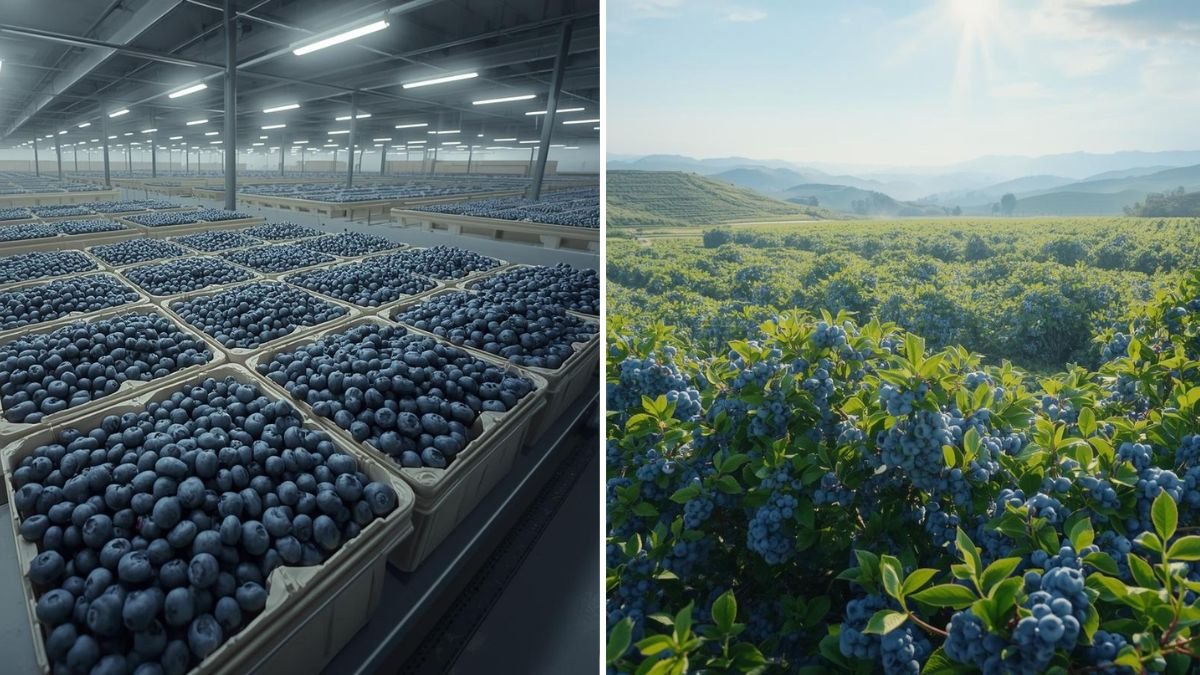
Blueberries have become one of the most popular fruits worldwide due to their taste and health benefits. They are rich in antioxidants, vitamins, and fiber, making them highly desirable. Global consumption has increased rapidly in recent years. This rising demand has encouraged many countries to expand blueberry cultivation. However, export leadership depends on more than just production volume. Logistics, quality standards, and seasonality play a major role. Understanding which country leads exports reveals important global trade dynamics. This article explores the world’s largest blueberry exporter and why it dominates.
Blueberry Cultivation and Export Basics
Blueberries require specific growing conditions to thrive. They prefer acidic soil, adequate moisture, and cool to moderate climates. Commercial production involves careful variety selection. Harvesting is labor-intensive and time-sensitive. Post-harvest handling is critical for export quality. Cold chain infrastructure is essential. Countries with advanced systems gain advantage. These basics influence export leadership.
Factors That Determine Blueberry Export Leadership
Export dominance depends on several factors. Production volume is important but not sufficient. Fruit quality and consistency matter greatly. Proximity to major markets reduces transport time. Strong logistics and cold storage are essential. Trade agreements help market access. Labor availability affects harvest efficiency. These combined factors shape global rankings.
Overview of Major Blueberry Exporting Countries
Several countries are major blueberry exporters. Chile, Peru, the United States, Canada, and Spain lead the market. Each has unique advantages. Seasonal differences allow year-round supply. Export volumes vary annually. Infrastructure quality differs by country. Market focus also varies. Understanding these exporters provides context.
Peru: The World’s Largest Blueberry Exporter
Peru is currently the largest blueberry exporter globally. Favorable climate allows multiple harvests per year. Modern farming techniques boost yields. Investment in irrigation and technology supports growth. Export-oriented production dominates the industry. Strong trade links with North America and Europe help. Efficient logistics reduce transit time. These factors make Peru the global leader.
Latest Posts
- OnePlus 15T Smartphone Unveiled – Featuring 200MP Camera, Snapdragon 8 Elite Gen 5 and Massive Battery
- Lava Yuva 5G Unveiled – 120Hz Display and Strong Performance for Everyday Use
- Nokia 1100 Launched – Premium Keypad Phone Returns at Budget Price ₹2,500
- Motorola G96 5G Unveiled – Featuring Stylish Design, Strong Performance and Advanced Camera Tech
- Vivo Y21d Unveiled – Massive 6000mAh Battery for All-Day Everyday Use
- Nothing Phone 4 Ultra 5G Launched – 16GB RAM, AI-Powered 50MP Camera and Flagship Performance
- OnePlus 5G Smartphone Launched – 300MP AI Camera, 7000mAh Battery & 100W Fast Charging
- Nothing Phone 3a Pro – High processor smartphone for gaming lovers – battery is 5000mAH
- Realme 15 Pro – 3 days battery backup smartphone with 50MP front camera under ₹28,000
- Vivo X200 FE – 12GB RAM + 256GB Storage smartphone with HD quality camera
Why Peru Overtook Traditional Exporters
Peru’s rapid rise is due to strategic planning. New blueberry varieties adapted to local climate were introduced. Large-scale commercial farms increased efficiency. Year-round production filled market gaps. Competitive labor costs helped expansion. Strong government and private investment supported growth. Export-focused infrastructure was built quickly. These advantages allowed Peru to surpass others.
Chile’s Role in the Blueberry Export Market
Chile was once the leading exporter. It remains a major global supplier. Favorable southern hemisphere season supports exports. Long experience ensures quality. However, rising labor costs affect competitiveness. Production growth has slowed slightly. Still, Chile plays a key role. Its reputation remains strong.
United States and Canada as Exporters
The United States produces large blueberry volumes. Most production serves domestic markets. Exports occur mainly to nearby countries. Canada also exports blueberries, especially wild varieties. Quality standards are high. Seasonal limitations restrict export volume. North American exporters remain important but not dominant. Domestic demand absorbs much supply.
Spain and Emerging Exporters
Spain is a leading European exporter. Proximity to European markets is advantageous. Production focuses on quality and freshness. Other countries are emerging suppliers. Morocco and Mexico are expanding rapidly. Investments in technology drive growth. Export competition is increasing. Market dynamics continue to evolve.
Global Blueberry Export Statistics
Recent global data confirms Peru’s leadership. Export volumes are measured annually in metric tons. Peru exports more than any other country. Chile and Spain follow. Market shares shift slightly each year. Demand growth supports expansion. Export values continue rising. Statistics highlight clear leadership.
Table Global Blueberry Export Comparison
Country Peru Chile Spain United States Export level highest high moderate moderate Primary markets global global Europe regional Seasonal advantage year round seasonal seasonal seasonal
Economic Importance of Blueberry Exports
Blueberry exports generate significant revenue. They support rural employment. Export industries stimulate infrastructure development. Processing and packaging add value. Foreign exchange earnings benefit economies. Investment continues to rise. Export success encourages diversification. Economic impact is substantial.
Quality Standards and Certifications
Export markets demand strict quality standards. Certifications ensure food safety. Traceability is increasingly important. Exporters invest in compliance. Quality consistency builds trust. Certification costs can be high. Leading exporters manage standards effectively. Compliance supports market access.
Challenges Facing Blueberry Exporters
Climate variability affects yields. Labor shortages can disrupt harvests. Transport delays risk quality loss. Rising costs reduce margins. Pest and disease management is ongoing. Market competition is increasing. Addressing challenges requires innovation. Resilience is essential.
Sustainability in Blueberry Farming
Sustainable practices reduce environmental impact. Water-efficient irrigation is common. Organic production is increasing. Sustainability attracts premium markets. Certification supports eco-friendly branding. Environmental responsibility matters. Long-term supply depends on sustainability. Exporters adapt accordingly.
Future Outlook for Blueberry Exports
Global demand is expected to continue rising. New markets are opening. Technology will improve efficiency. Peru is likely to remain dominant. Other exporters will expand. Competition will intensify. Sustainability will shape growth. The future looks promising.
Conclusion: The World’s Leading Blueberry Exporter
Peru is the largest blueberry exporter globally today. Strategic investment, favorable climate, and export focus drive leadership. Other countries remain important competitors. Global demand continues to grow. Trade dynamics will evolve. Understanding export leaders helps explain market trends. Blueberries remain a high-value global fruit.